
Results at a glance
🕒 Hours saved weekly: Not formally measured, but dramatically reduced “constant back and forth” and manual updates
👥 Team using Koalendar: Front-of-house + operations lead (with visibility for the leadership team)
📅 Years using Koalendar: ~2 years
⭐ Top benefit: “Being able to see all of the rooms on a single calendar.”
Overview
The Improv Shop is a small, independent improv theater that functions as both a live performance venue (hosting shows four nights a week) and a training center teaching improv to adult students year-round.
With a four-person core team, plus bar and kitchen managers and hourly staff, the organization supports a large and active community, including roughly 300 adult students every eight weeks, plus additional graduates, performers, and patrons cycling in and out.
To support that growing community, the theater also operates an annex building with six reservable rooms used primarily for improv practice (and occasionally for classes). Community members pay a monthly subscription for access, helping cover the building’s costs.
The challenge: A spreadsheet system that couldn’t keep up
Before Koalendar, annex reservations were managed through a mix of spreadsheets, text messages, and Facebook messages.
As the community grew, that approach started to feel unmanageable, and risky.
- Requests came in from everywhere (“hey, can you throw me on the calendar?”)
- Booking relied heavily on one person manually tracking changes
- The team worried about slow response times, lost messages, and double bookings
- Most importantly, there wasn’t a reliable source of truth
As Ashley, the operations lead, put it: “I was like, this feels like… chaotic.”
And with people paying for access, the stakes were higher:
“What’s going to happen is people are going to be paying money for this access… and I’m not going to manage to be able to respond to everyone in a timely way.” Ashley pondered.
They needed a system that was simple for hundreds of community members to use (without requiring an app download) while still giving the team clear oversight of a complex schedule across multiple rooms.
Solution: Six room calendars, one simple booking experience
After researching reservation platforms, the theater chose Koalendar for four key reasons:
1.The right fit for scale and budget
Many tools were either too complex or too expensive for a community-based organization. Cost mattered, especially with members paying about $20/month for access.
“It couldn’t be such an expensive solution that… the juice is not worth the squeeze.”
2. A user-friendly experience (no app required)
They didn’t want to ask hundreds of people to install and learn a new app just to reserve a practice room.
“I don’t think it’s realistic to ask hundreds of people to download an app…”
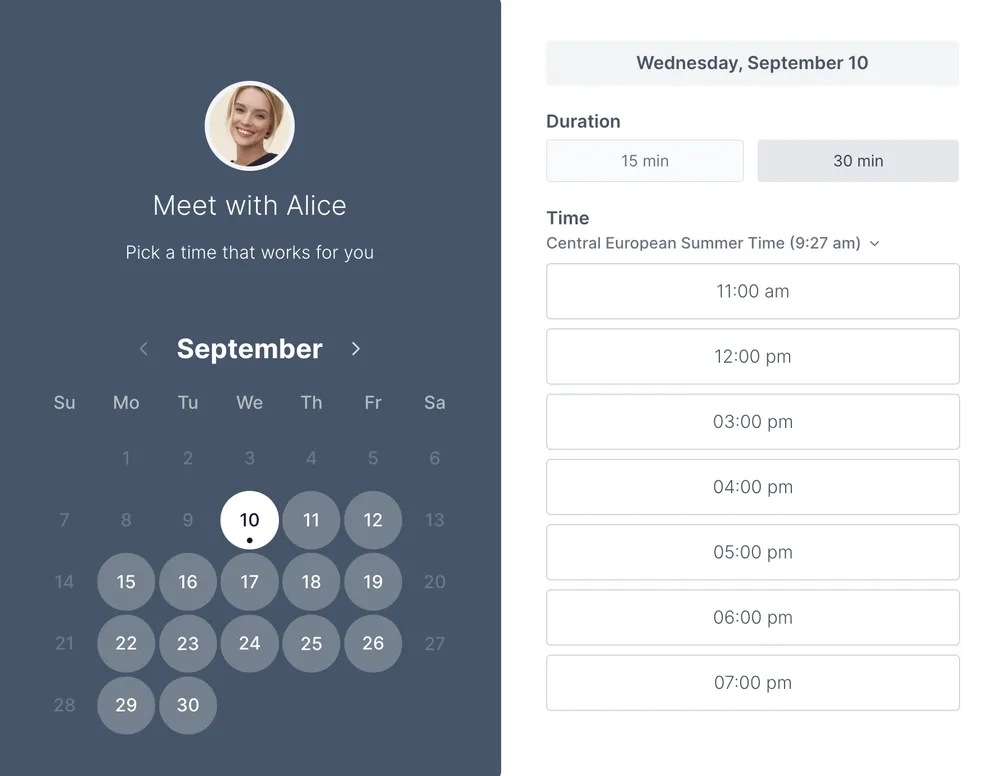
Instead, Koalendar made it easy to share a link, let members self-serve availability, and keep everything updated in real time.
“This tool is very easy to use and easy for everybody to learn without me having to do a lot of heavy lifting”.
3. Oversight across multiple rooms, without complexity
Koalendar lets them create a separate calendar for each room, then manage them together behind the scenes.
That meant they could:
- Hold blocks for classes and events
- Keep remaining time open for community reservations
- Avoid double bookings automatically with real-time availability
- Track who is using which room and when
“It gives us the ability to do a different calendar for every single room on the back end.”
4) Built-in approvals for membership-based access (without heavy software)
Koalendar didn’t just solve scheduling, it also gave the team a lightweight way to manage who’s allowed to book.
By using Koalendar’s approval option, reservations come in as requests, and the operations lead can approve them only after confirming the member’s subscription is active.
“That just helps us with due diligence if folks have their subscriptions lapsed”
They also love having a clear record of past reservations, which adds accountability and makes it easy to look back if questions come up.
“The fact that it does track previous meeting spaces… is really valuable to me.”
The outcome: Less back-and-forth, fewer mistakes, more confidence
Koalendar became the theater’s scheduling “source of truth” for both staff and the community. On top of that, instead of messages and manual updates, members can now check availability themselves.
“I can’t live without being able to see all of the rooms on a single calendar. It’s a very easy, simple user interface—and all that information is real-time accessible to everybody, which limits the constant back and forth. Honestly, it was a relief”.

Ashley Rube
Educator & Facilitator
What changed day-to-day
✅ Clear oversight across six rooms
✅ Fewer double bookings and confusion
“Everyone’s seeing the same thing all the time.”
✅ More equitable access for the community: Because availability updates in real time, no one gets an unfair advantage by “getting to the GM first” in DMs.
✅ A smoother experience for all comfort levels with tech: With a cross-generational audience, ease of use mattered.
Conclusion: One link that keeps the annex running smoothly
Koalendar gave the theater a simple, reliable way to manage a surprisingly complex operation:
- six rooms,
- constantly changing schedules, and
- hundreds of community members rotating in and out.
Instead of juggling spreadsheets, texts, and Facebook messages, they now have a single source of truth that updates in real time so:
- patrons can self-serve availability,
- staff can stay aligned, and
- double bookings don’t happen.
Most importantly, it created a smoother, more equitable experience for the whole community, with a setup that’s easy to use, easy to share, and easy to trust.