
Time is a non-renewable resource, and the people who use it best rarely run on luck or are working longer hours. They’re using smarter systems.
Whether you’re running a business, teaching a classroom, or leading a team, better time management isn’t about squeezing more into your day. It’s about using the right time management hacks to focus, plan, and execute with intention.
These aren’t extreme hacks or 4AM routines. They’re small shifts that add up, ways to work with your brain (not against it) and get more of the right things done.
Let’s get into it.
1. Start with priorities, not your inbox
One of the most effective time management hacks for busy professionals is simple: choose your highest-impact task, and do it first.
The “One big thing” rule
Each morning, identify the one thing that actually matters today. Something that, if completed, will make everything else lighter.
Example:If you're a coach running a business, that one thing might be outlining your next webinar. For a team lead, it could be preparing a hiring proposal that’s been sitting on the back burner.
Write it down. Block off 60–90 minutes in your calendar to focus on it before you check email or Slack.
Urgent vs. Important: The Eisenhower matrix in action
Need help choosing where to start? Use the Eisenhower Matrix to filter tasks and you’ll instantly save hours:
- Urgent and important = Do it now
- Important but not urgent = Schedule it
- Urgent but not important = Delegate
- Neither? Delete.
It’s one of those project management hacks that gives instant clarity.

2. Automate what drains your energy
There’s a quiet cost to admin tasks, and meeting scheduling is one of the biggest offenders.
High performers don’t waste time playing email ping-pong. They automate it.
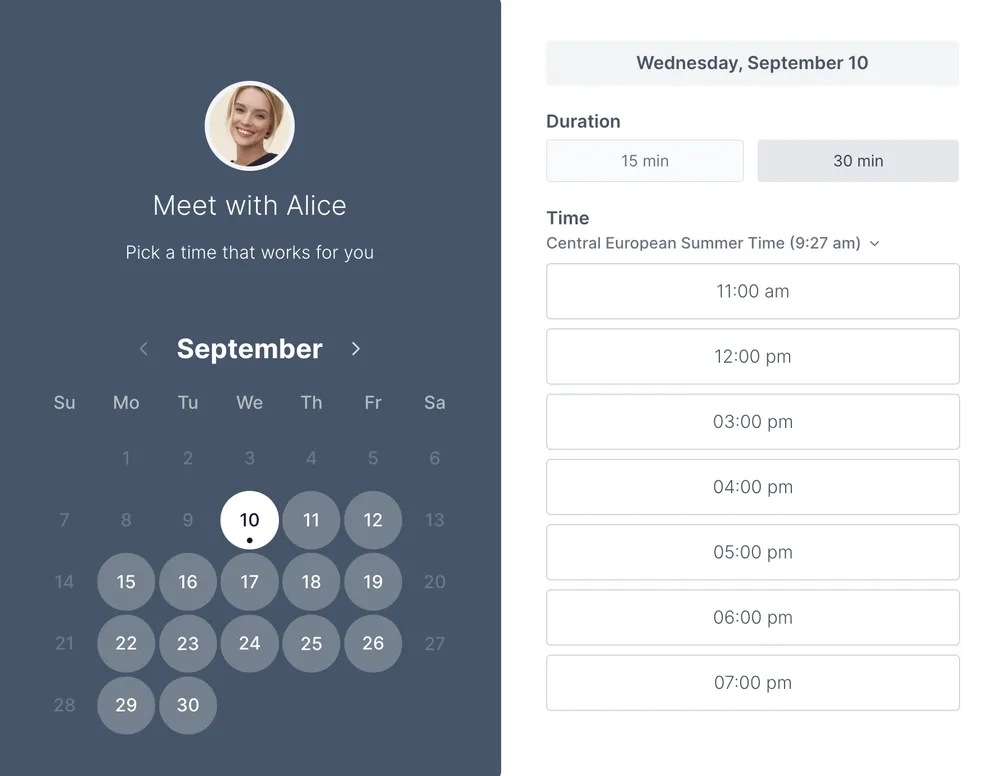
Example: Instead of emailing “What time works for you?” ten times a week, tools like Koalendar let you set your availability once and share a link. Clients, parents, or team members book themselves in, no back-and-forth required.
Add buffer time between meetings, sync it with Google Calendar, and even set up automatic reminders so people show up when they’re supposed to. This simple time hack ensures you stay in flow and your calendar stays under control.

3. Stop multitasking: You’re not fooling your brain
Trying to write a report, answer messages, and prepare for your next meeting all at once? That’s not multitasking. That’s productivity sabotage.
High performers know that focus is a force multiplier and they treat it like gold.
Example: Try batching similar tasks together. Reserve 10–11 AM for creative work, then handle emails from 3–4 PM. You’ll get more done and feel less drained.
Or use the Pomodoro technique:
- Set a timer for 25 minutes
- Work on one task
- Take a 5-minute break
- Repeat 4 times, then take a longer break
It’s a simple system that makes even big projects feel manageable. And yes, this works for educators too. Teacher time management hacks often start with finding and protecting even 30 minutes of quiet planning time.
4. Track the truth about your time
The human brain isn’t great at estimating time. We tend to undercount distractions and overestimate productivity.
So don’t guess. Track.
Example: Block a week to log how you spend each hour, manually, or with tools like RescueTime or even your calendar. Then look for patterns.
You might find that:
- That “quick scroll” on LinkedIn eats 45 minutes daily
- You’re spending 12+ hours a week in meetings
- Your best focus time is 9–11 AM, but it’s filled with admin
When you keep timing what matters, you’ll naturally shift toward better outcomes and improved focus.
5. Design your space for deep work
Your environment is either working with you, or stealing your focus.
Take 15 minutes to rethink your space:
- Silence your phone or leave it in another room during focus blocks
- Use apps like Freedom or Cold Turkey to block distracting websites
- Keep your desk clear of visual clutter, yes, even the half-read book pile
Create a short routine that signals “deep work time”: maybe it’s lighting a candle, putting on noise-canceling headphones, or setting a 60-minute timer. Whatever gets your brain into “let’s go” mode.
These small workplace hacks help train your brain that it’s time to work, without the fight.

Final thought: Make time work for you
High performers don’t just have good time management tips and tricks, they build habits around them.
They don’t scramble to find time. They schedule it with intention. They don’t chase every task. They prioritize the few that actually move things forward. And they let tools do the repetitive stuff (like scheduling), so they can focus on the work that actually matters.
But this isn’t about perfection. It’s about progress.
Pick one of these hacks and try it for the next five days.
Maybe you time-block your mornings. Maybe you let Koalendar's free forever plan handle your bookings so your inbox isn’t flooded with “what time works?” messages. Maybe you just clear off your desk and set a real lunch break.
The point is: small changes add up. Especially when they’re repeatable.
You don’t need more hustle. You need more headspace. And you’ve got everything you need to create it.
Ready to spend less time scheduling and more time doing? Start using Koalendar today—no setup stress, no credit card.