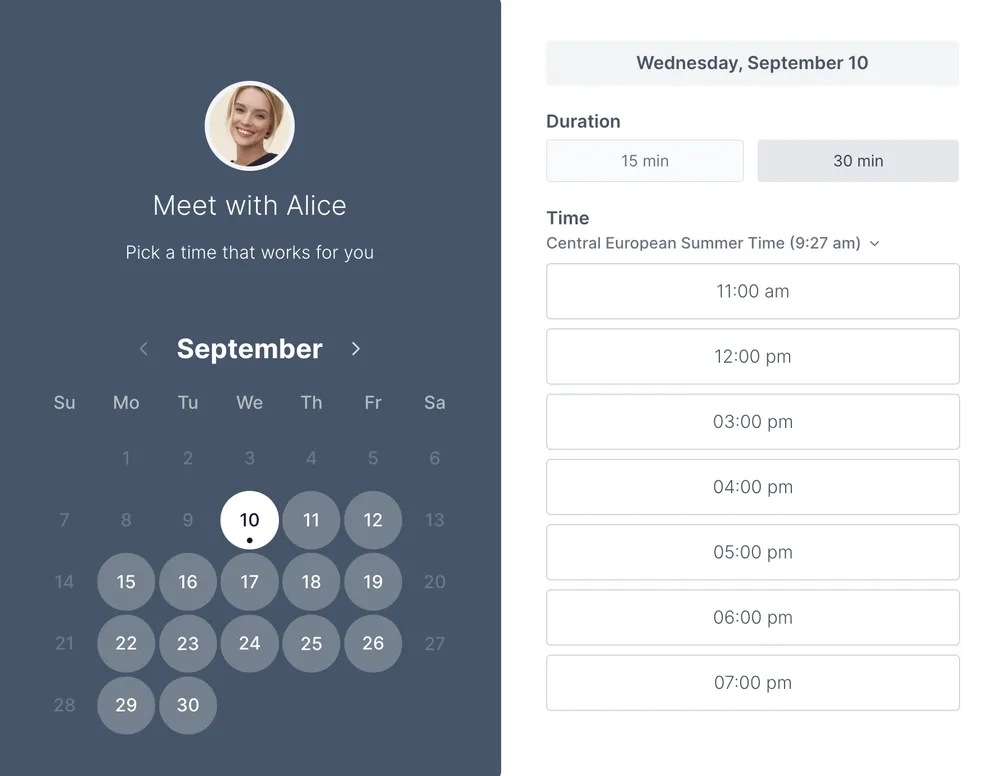
What is automated booking?
Automated booking is a flow where a guest picks a time, confirms details, and receives a calendar event without a human manually proposing slots. Your software enforces duration, buffers, notice windows, and conflicts in the background while the customer stays in one guided path.
Why automated booking matters
Manual scheduling burns time on email ping-pong and increases drop-off when people stall between messages. Automation converts interest into a firm calendar hold in one session. It also scales: nights, weekends, and busy seasons all behave the same because rules do the work. Teams still intervene for exceptions, but the default path no longer needs a coordinator for every meeting.
How automated booking works
- You publish a booking page with meeting length, location or video defaults, and optional payment or intake questions.
- The system reads connected calendars and business rules to build only valid openings.
- The guest selects a slot, enters contact information, and confirms in a single flow.
- The platform creates calendar events, sends confirmations, and schedules reminders according to your template.
- Changes such as reschedule or cancel follow the same automated rules until a human override is needed.
Example of automated booking
A tutor shares a link in her email signature. A parent opens it on a phone, sees three evening slots that respect her minimum notice, books 45 minutes, and pays a deposit. Both receive confirmations instantly and reminders two days before. The tutor never typed proposed times because the parent chose among real openings.
Common use cases for automated booking
- Freelancers and consultants selling introductory calls
- Internal IT or HR office hours with standardized slots
- Customer onboarding calls with scripted prep questions
- Retail-style services that publish first-available appointments
- Teams that want one link on a website, ad, or QR code
Automated booking vs manual scheduling
Manual scheduling relies on a person to suggest times, compare calendars, and confirm by message. Automated booking pushes that work to software with guardrails. Hybrid flows still exist, for example automation for standard meetings and manual help for bespoke projects, but the baseline expectation for customers is increasingly self-serve.
Best practices for automated booking
- Keep the shortest viable booking path; collect extra questions only when they change preparation.
- Show time zones clearly and test your page from another region occasionally.
- Use cancellation and reschedule rules that match how strict you are in real life.
- Monitor failed payments or form errors so broken automation does not silently lose leads.
- Offer a human contact path for VIPs without removing automation for everyone else.
Related scheduling terms
- Booking page
- Calendar sync
- Intake forms
- Appointment reminders