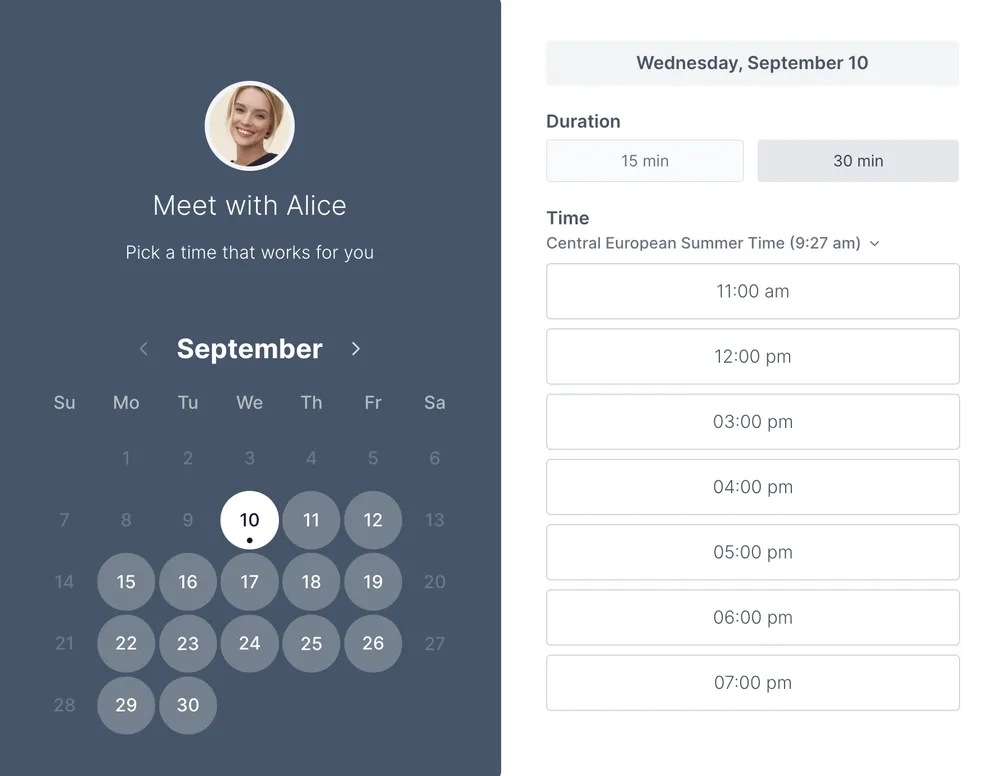
What is calendar sync?
Calendar sync is the ongoing process of connecting your booking tool to calendars such as Google Calendar, Microsoft Outlook, or Apple iCloud so free and busy times stay accurate. When events change, your public availability updates without you copying meetings by hand.
Why calendar sync matters
Scheduling software is only trustworthy if it sees the same reality you see in your calendar. Sync reduces double bookings, embarrassing conflicts, and manual busy blocks. It also saves time because personal appointments, travel, and focus time automatically block booking slots. For teams, sync is the foundation of fair routing and accurate round robin assignment.
How calendar sync works
- You connect one or more calendars through a secure OAuth flow granted by your provider.
- The scheduling product reads busy times according to the permissions you approve, usually free or busy rather than full event details.
- When a new event appears, moves, or ends, the provider notifies the scheduler or the scheduler polls on a schedule.
- Confirmed bookings are written back to your calendar as holds so other tools respect the same slot.
- Guests only see times that remain free after all synced calendars and rules are applied.
Example of calendar sync
A consultant connects Google Calendar for work and a personal Apple calendar used for school pickups. A prospect opens her booking page and only sees gaps where both calendars are free during business hours. When someone books Tuesday at 2:00, the meeting appears on her Google calendar with a video link, and the slot disappears from her page immediately.
Common use cases for calendar sync
- Solo professionals who live inside one primary calendar
- People who maintain separate work and personal calendars
- Teams that need multiple hosts checked before a slot is offered
- Organizations that add rooms or equipment calendars as extra busy sources
- Anyone who wants bookings to appear next to internal meetings automatically
Calendar sync vs calendar import
Importing usually means a one-time upload or a static snapshot. Sync is continuous: new meetings, edits, and cancellations flow through automatically. If you only import, your page can quickly show times that are no longer free. Sync is the right default for live booking pages, while import is better for migration or rare offline planning.
Best practices for calendar sync
- Connect every calendar that affects your real availability, not only your main work account.
- Use explicit busy blocks for prep and travel so guests cannot book impossible days.
- Review provider permissions after password resets or security changes that can break tokens.
- Keep booking titles consistent so you can search your calendar for client meetings quickly.
- If you use multiple tools, confirm only one scheduler writes the same event type to avoid duplicates.
Related scheduling terms
- Conflict detection
- Connected calendar
- Automated booking
- Time zone scheduling