What is team scheduling?
Team scheduling is the way groups share availability, booking pages, and hosts so customers book the right conversation without manual coordination. It covers shared links, pooled hosts, permissions, and the calendar checks that keep offers honest for everyone involved.
Why team scheduling matters
Solo scheduling breaks when more than one person can deliver the same outcome. Teams need one customer-facing experience with correct logic behind the scenes. Good team scheduling shortens response time, prevents internal double booking, and scales hiring because new members plug into existing pages instead of rebuilding links for every route.
How team scheduling works
- Admins define who can be booked, which roles see settings, and which booking pages are public.
- Hosts connect calendars so free time reflects real life across work and personal blocks you choose to include.
- You choose routing such as round robin, priority order, or named hosts for specialized queues.
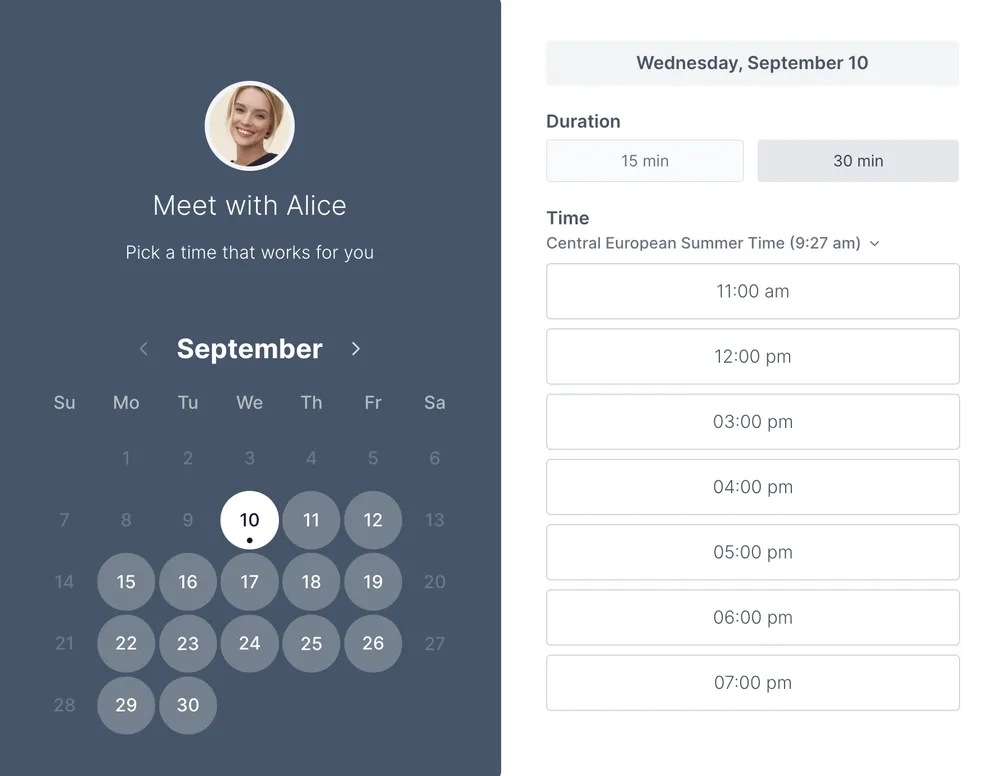
- Guests see combined availability or pick a person, depending on the page type you publish.
- Notifications route to the right inbox so confirmations, reminders, and changes reach both the guest and owning host.
Example of team scheduling
A customer success team publishes one health-check link. Any available CSM can take the call, so the page uses rotation across four calendars. When an enterprise account needs a named CSM, the same team also maintains direct links per person. Marketing promotes the team link for speed while account managers share personal links when continuity matters.
Common use cases for team scheduling
- Sales and SDR teams sharing inbound demo links
- Support pods that rotate live troubleshooting sessions
- Recruiting teams splitting screens across interviewers
- Clinics with multiple providers offering the same visit type
- Agencies that blend account leads with backup coverage
Team scheduling vs round robin scheduling
Round robin is one assignment method inside team scheduling. Team scheduling is the wider system: roles, shared pages, permissions, and calendar sources. You can run a team without round robin if everyone owns a fixed territory, but you still need team scheduling practices to keep data and links coherent.
Best practices for team scheduling
- Document which pages are public versus internal-only to avoid leaking draft experiments.
- Review seat usage when adding hosts so billing matches who truly needs booking access.
- Standardize meeting lengths and buffers so pooled availability feels fair across hosts.
- Pair team pages with intake forms so routed hosts arrive with context.
- Audit calendars quarterly for disconnected accounts that silently break availability.
Related scheduling terms
- Round robin scheduling
- Host
- Seat
- Routing rules