What is round robin scheduling?
Round robin scheduling is a way to assign each new booking to the next eligible teammate in a rotating order. It spreads demand evenly, shortens wait times for customers, and stops one person from taking every meeting when several people can handle the same type of appointment.
Why round robin scheduling matters
Teams that share one public booking link need a fair, predictable way to decide who gets the next slot. Round robin improves response speed because the next open person is chosen automatically. It also reduces resentment and burnout on busy teams where manual picking would always favor the same calendars. For revenue and support teams, faster assignment often means more conversations and happier customers.
How round robin scheduling works
- You define a pool of hosts who can take the same booking type, for example every account executive who runs discovery calls.
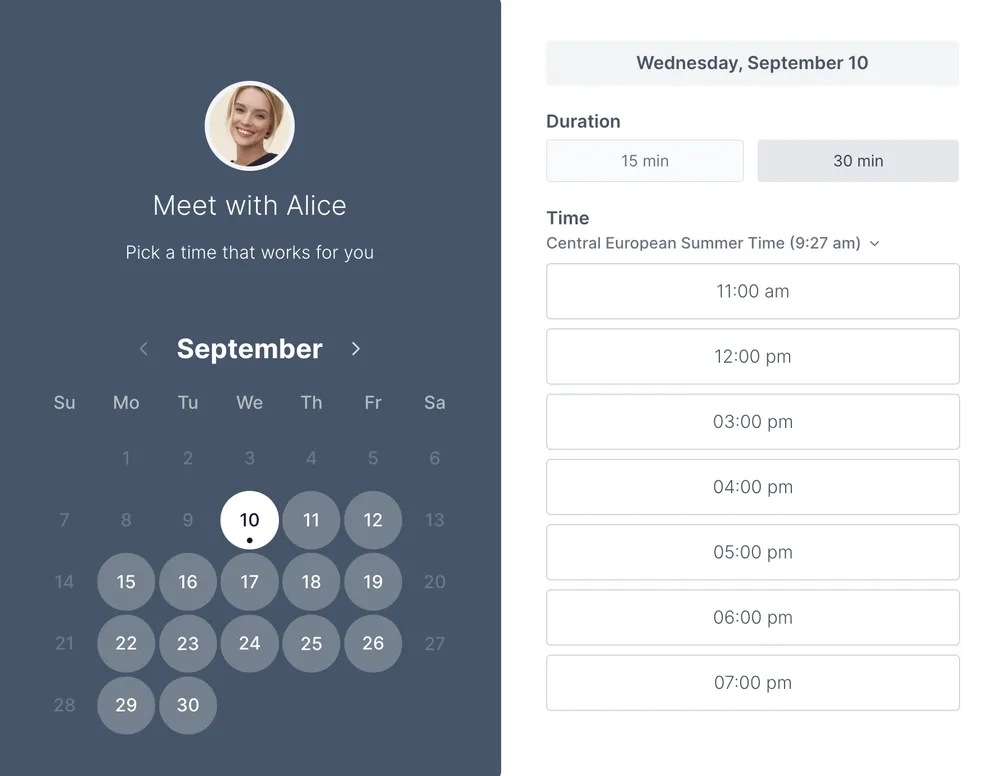
- A guest picks a time that is free on the shared rules you set, such as length, buffers, and business hours.
- The system looks at who is available in that window and assigns the booking using rotation, so workload stays balanced over time.
- The booking lands on the chosen host's calendar with the right video link, reminders, and any intake answers you collect.
- If someone is out or fully booked, rotation skips to the next eligible person so customers still see real availability.
Example of round robin scheduling
Imagine three sales reps share one demo link for the same 30-minute meeting type. The first booking might go to Rep A, the second to Rep B, the third to Rep C, then the cycle starts again. If Rep B is busy at the time a prospect chooses, the system offers slots where A or C are free and assigns the meeting accordingly. The customer still uses one simple link, while the team shares the load.
Common use cases for round robin scheduling
- Sales teams that want one inbound demo link but many closers
- Customer support or success teams routing meetings to specialists
- Recruiting teams sharing screening calls across interviewers
- Clinics or service desks where any qualified provider can take the appointment
- Partnerships and onboarding teams that need fast, even coverage
Round robin scheduling vs manual assignment
Manual assignment means someone chooses the owner for each meeting or customers pick a specific person from a list. That works when rapport matters, but it is slower and can overload popular people. Round robin is better when meetings are interchangeable and speed and fairness matter more than a fixed owner. Many teams combine both: a team page for speed, and named pages when a lead already knows who they want.
Best practices for round robin scheduling
- Keep meeting types consistent so any host in the pool can deliver the same experience.
- Sync every host calendar and block personal time so rotation only offers real availability.
- Use buffers and minimum notice so handoffs between back-to-back meetings stay realistic.
- Review utilization monthly and adjust pool membership when someone is overloaded or underused.
- Pair rotation with reminders so no-shows do not waste slots that could have gone to another host.
Related scheduling terms
- Team scheduling
- Conflict detection
- Availability
- Host