
TL;DR
If you want the best scheduling app for massage therapist workflows, start by matching the tool to your practice.
- MassageBook and ClinicSense are stronger for massage-specific records like SOAP notes and intake forms.
- Vagaro and Mindbody make more sense for bigger wellness brands that want broader business management.
- Square Appointments is appealing if you already run payments through Square.
- Koalendar is the simplest, low-cost option (especially because its free plan includes unlimited bookings and scheduling links) for solo therapists who mainly need a clean booking page, calendar sync, reminders, and deposits without paying much.
The wrong app adds admin. The right one cuts the phone tag, reduces no-shows, and helps you look polished from the first booking.
Running a massage practice can get messy fast. One client books by text, another leaves a voicemail, your calendar is in one place, payments are in another, and suddenly you are spending too much time managing appointments instead of doing treatments.
That is where the right scheduling app can help. Some tools are built for full practice management. Others focus on the basics: letting clients book online, sending reminders, and keeping your schedule organized. That matters even more in a growing industry, with the massage therapy services market expected to expand in the coming years, according to Market Growth Reports’ massage therapy services market analysis. In this guide, we compare six of the best options and help you figure out which one makes sense for your practice.
What to look for in a massage booking app
To choose the best scheduling app for massage therapists for your practice, you need to start by answering one question: what kind of work are you actually doing every day? A solo mobile therapist needs something very different from a spa with four practitioners, rooms to coordinate, and a front-desk workflow. Still, most massage businesses should judge software in two layers: core scheduling features and advanced practice tools.
Core scheduling features
Online booking
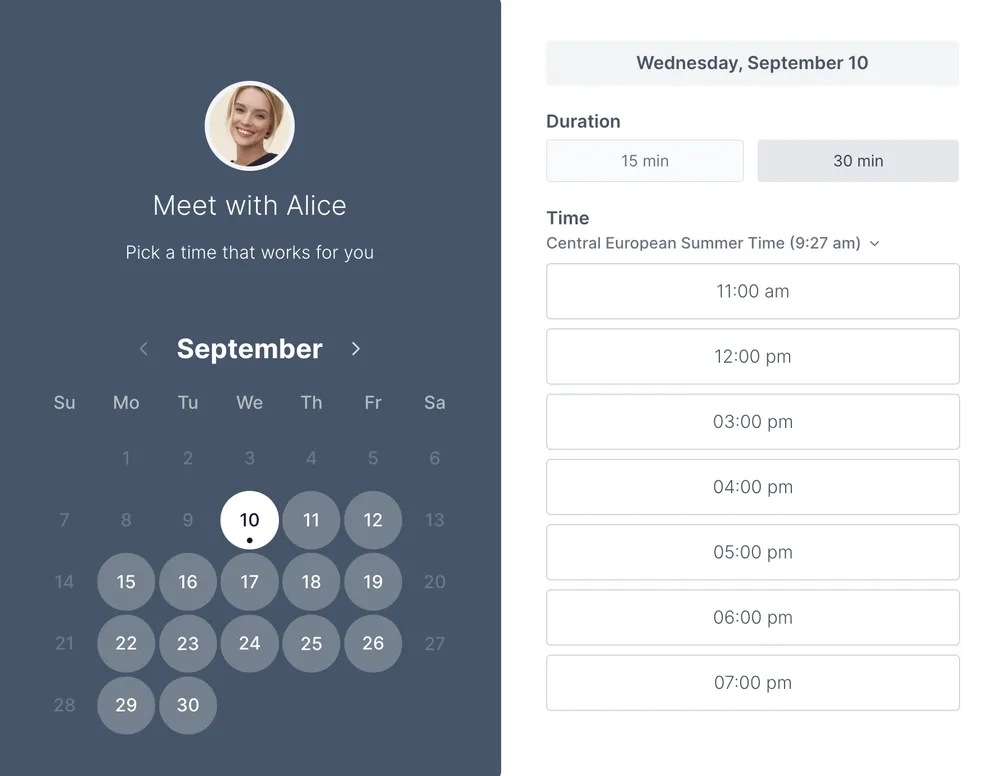
This is your first must-have. Clients should be able to book without calling, texting, or waiting for you to become available to reply. A good client-facing booking page should show:
- Your availability in real time
- Service lengths and price
- Location details
Additionally, it should let you set up buffers and customize your colours and image.
That is your shortlist for any best online booking system for massage therapists.
Reminders
No-shows eat revenue fast and reminders are key to solving this problem. While email reminders are useful, automated text reminders are even better for last-minute attention. If missed appointments are a recurring problem don’t wait any longer and check out this guide on how to reduce no-shows for effective tips and tricks.
Calendar sync
This is what prevents double-booking. For massage therapists, that means your booking app should block time when you are already busy in Google Calendar, Outlook, or iCloud. This is especially important for mobile therapists juggling travel time or therapists who still receive bookings from several channels. Koalendar, for example, syncs with Google, Outlook, and iCloud on its free plan.
Advanced practice tools
Once your calendar is under control, the next question is whether you need deeper clinic tools.
Intake forms
Asking questions during the booking process helps you collect contraindications, preferences, injuries, medications, and consent details before the client arrives. MassageBook, ClinicSense, and Koalendar, all support customizable forms in different ways.
SOAP notes
This is where general scheduling tools and massage-specific software starts to separate. MassageBook and ClinicSense both emphasize SOAP notes for therapists. Square and Koalendar are more scheduling-first tools, so if SOAP documentation is central to your workflow, that matters when making a decision.
If client records and intake paperwork are a bigger part of your workflow, it may also help to see how these needs overlap with medical scheduling software.
Reporting
It becomes important once you want to see repeat booking patterns, revenue by service, therapist performance, or no-show trends. All the tools in this review cover reporting in one way or another.
Memberships and packages
These are useful if you want recurring income or prepaid treatment bundles. Mindbody, for example, is built for retention and recurring revenue models at large scale, while MassageBook supports memberships.
Pro tip: If you collect health information digitally, do not treat compliance as an afterthought. The HHS says the HIPAA Security Rule requires administrative, physical, and technical safeguards for certain electronic protected health information, and software vendors differ widely in how they support regulated use cases.
No-shows and late cancellations
For many massage therapists, this is the main reason for looking for a scheduling app. The right one will not only help you keep bookings organized but also help you protect the time you cannot resell once it’s gone.
Automated reminders by email and text
Email reminders are the minimum. Text reminders are often where you see the bigger difference, especially for clients who book weeks in advance. MassageBook, Square, Koalendar, and Mindbody all offer automated reminder workflows, though the exact setup and plan access vary.
A clear confirmation message also helps set expectations early, so it’s worth using a strong appointment confirmation email template when you set up your booking flow.
If you already use Google Calendar and wonder whether you can just bolt on text reminders, that can work for a while. But once you want branded booking pages, deposits, or intake details, it usually makes more sense to move to a real scheduling platform.
Deposits and cancellation settings
Deposits help separate serious bookings from “maybe” bookings. They are especially useful for long appointments, first-time clients, and mobile sessions where travel time raises the cost of a no-show. MassageBook supports advance payments and deposits. Koalendar supports full payment or deposit collection through Stripe, and many consultants and service businesses use that to secure attendance. Mindbody also supports pricing options and contracts, while Square ties scheduling closely to payments.
The strongest setup is usually simple: a clear cancellation policy, automated reminders, and either a deposit or card-on-file policy for higher-risk bookings. That combination protects revenue without turning your checkout into a headache.
Free vs. paid
This is where many therapists get stuck. Free sounds smart until it starts costing you time. Paid sounds expensive until it prevents just one or two missed appointments a month.
When free is enough
A free tool is often enough when you are a solo therapist with a straightforward service menu, one or few calendars, and no need for deep practice management. If your main goals are to stop phone tag, share a booking link, and avoid double-booking, a generous free plan can absolutely do the job. Koalendar’s Free Forever plan includes unlimited bookings, unlimited event types, unlimited scheduling links, and sync with 2 calendars (Google, Outlook, or iCloud), which is unusually broad for a free tier. Square Free can also work if you mainly want booking tied into the Square ecosystem and do not mind paying through processing rather than subscription.
Once you have your free booking website, you can easily add it to your book now button on Instagram, Facebook or Google Business, and start using a free booking link as a real client acquisition tool.
When paid makes sense
Paid software makes sense when you need one or more of these: intake forms, payments at booking, SMS reminders, multi-staff calendars, custom branding, memberships, analytics, or SOAP notes. ClinicSense starts at $39 and goes up to $99 depending on appointment volume, while Mindbody starts at $99 per location and is aimed at broader wellness business management. Koalendar’s Pro plan starts at $6.99 per seat per month on annual billing and adds booking form questions, payments, custom reminders, tentative bookings, and advanced integrations.
That is the real free-vs-paid test: not “Can I avoid a monthly fee?” but “Which fee removes the most friction from my week?” If a tool saves you from one double-booking, one missed intake, and one no-show every month, it often pays for itself.
Best apps compared
 | MassageBook | ClinicSense |  |  |  | |
| Best for | Independent therapists and lean teams | Massage-specific solo practices | Solo therapists and small clinics | Studios and spas | Therapists already using Square | Growing wellness brands and larger studios |
| Starting price | Free or $6.99/seat | $20/mo | $39/mo | $23.99/mo | Free or $49/location | $99/location |
| Online booking | ✅ | ✅ | ✅ | ✅ | ✅ | ✅ |
| Calendar sync | ✅ | ✅ | ✅ | ✅ | ✅ | ✅ |
| Email reminders | ✅ | ✅ | ✅ | ✅ | ✅ | ✅ |
| SMS reminders | ✅ | ✅ | ✅ | ✅ | ✅ | ✅ |
| Intake forms | ✅ | ✅ | ✅ | ✅ | ✅ | ✅ |
| SOAP notes | ❌ | ✅ | ✅ | ❌ | ❌ | Limited |
| Deposits / prepayment | ✅ | ✅ | ✅ | ✅ | ✅ | ✅ |
| Packages / memberships | ❌ | ✅ | Limited | ✅ | Limited | ✅ |
| Multi-staff support | ✅ | ✅ | ✅ | ✅ | ✅ | ✅ |
| Main strength | Simple, affordable scheduling with a strong free plan | Built for massage therapists | Strong mix of scheduling and clinical tools | Broad spa/wellness business features | Booking and payments in one ecosystem | Advanced business and marketing tools |
1. MassageBook
MassageBook is the most massage-specific option on this list. It is built around therapist workflows, not generic appointment slots. It offers online booking, auto-reminders, advance payments, custom intake forms, SOAP notes, Google Calendar sync, and marketing tools like promotions and memberships.
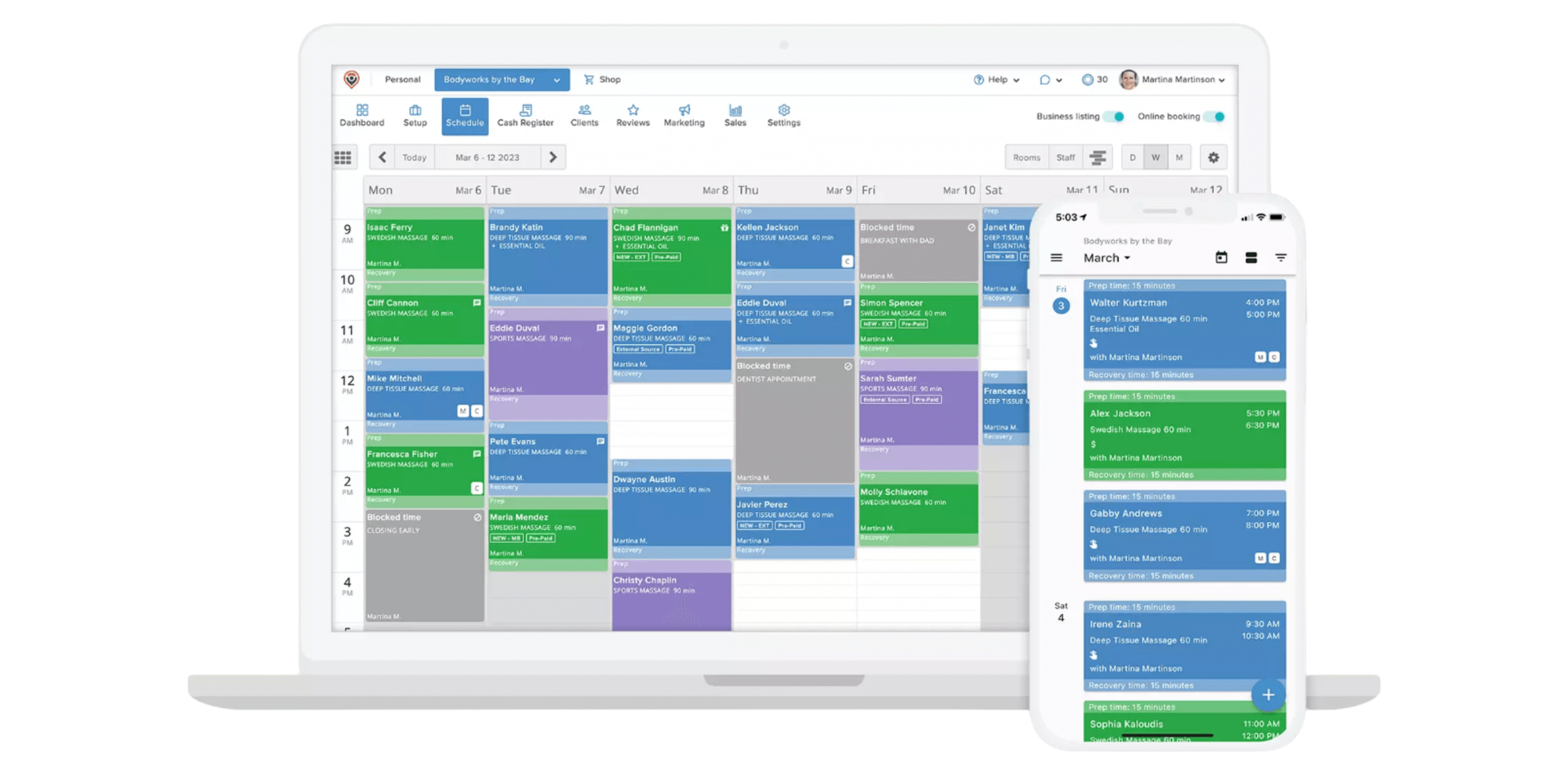
Best for: massage therapists who want a purpose-built platform with clinical and marketing tools in one place.
Pros:
- Massage-first workflow
- SOAP notes
- Intake forms
- Memberships
- Clinical and marketing tools in one place
Cons:
- Less lightweight than a simple scheduler
- Can be more than you need if you only want booking plus reminders
Pricing
Pricing starts at $20 per month and goes up to $50 per month.
2. ClinicSense
ClinicSense was originally built for solo massage therapists. It includes scheduling, reminders, SOAP notes, intake forms, and marketing tools.
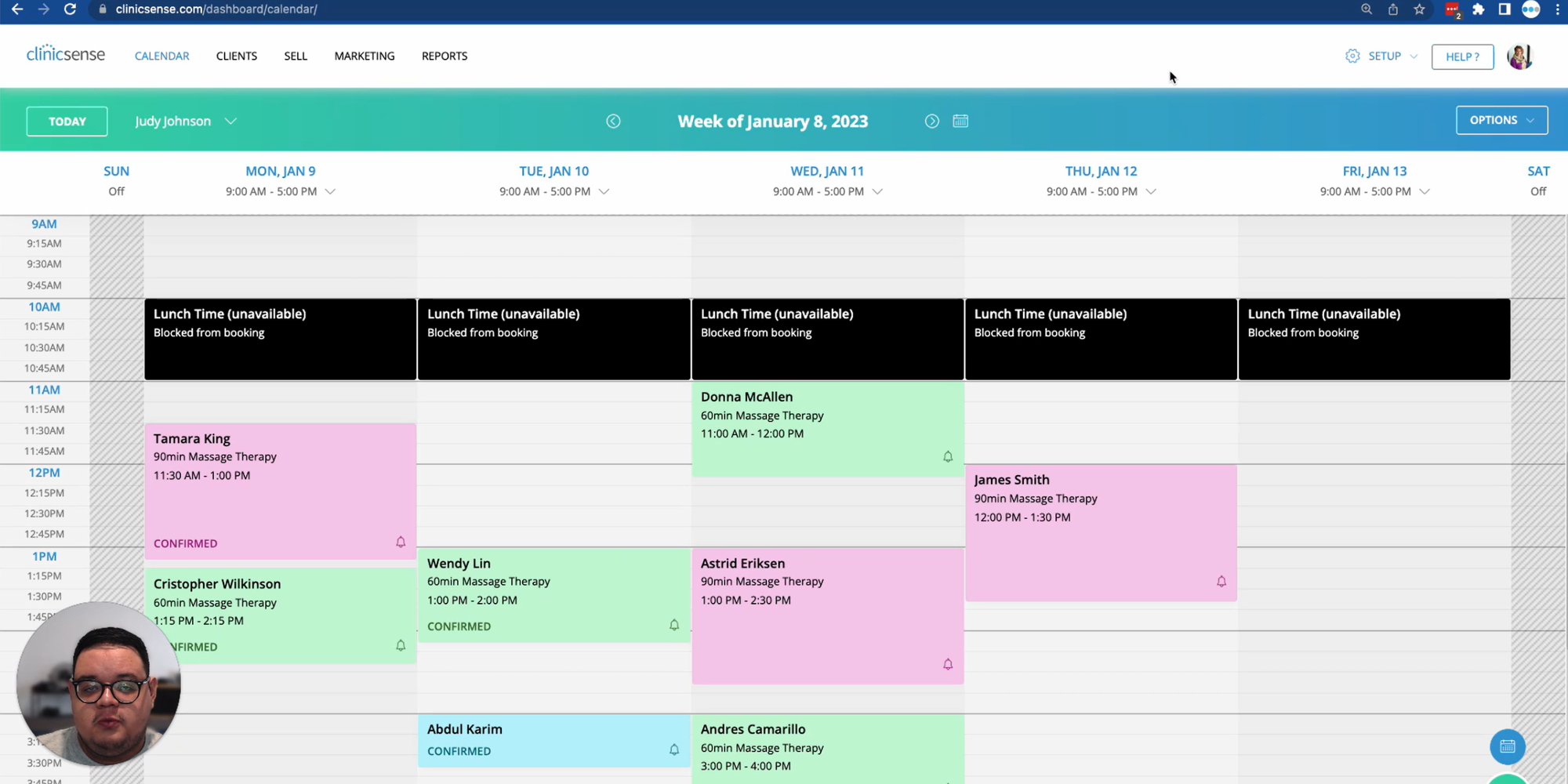
Best for: solo massage therapists and small clinics that want scheduling plus clinical records.
Pros:
- Massage-friendly feature set
- Customizable SOAP and intake forms
- Clear path from solo to small team
Cons:
- Lite can feel restrictive if your bookings grow quickly
- Costs rise with volume and extra staff
Pricing
Its pricing is tiered by appointment volume: Lite, Standard, and Premium range from $39 to $99, with additional practitioners costing extra on higher plans.
3. Vagaro
Vagaro is an all-in-one software built for beauty, wellness, spa, and fitness businesses. It is broader than massage-only software, which is great for multi-service studios.
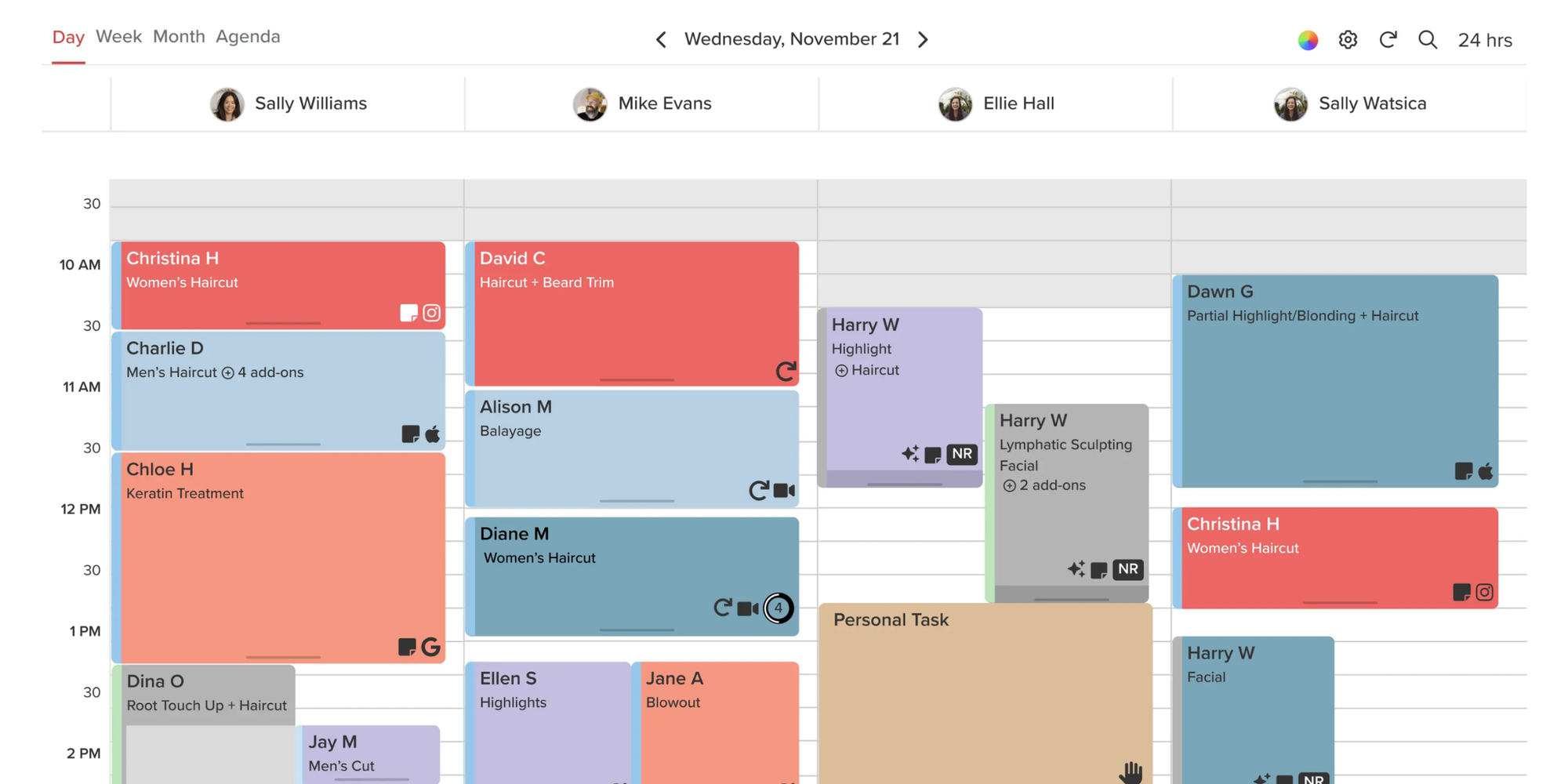
Best for: wellness studios and spas that want a broad operations platform.
Pros:
- Strong for spa-style businesses
- SOAP notes, intake forms
- Broad business toolkit, including memberships and packages
- Familiar with beauty and wellness
Cons:
- Pricing can climb with add-ons and additional providers
- Heavier than many solo therapists need
Pricing
Pricing starts at $23.99 per month for one bookable calendar but it also uses an add-on style model for some capabilities, so the real cost can rise as your setup gets more complex.
4. Square Appointments
Square Appointments offers online booking, unlimited calendars, custom scheduling, reminders, customer profiles, and tight payment integration.
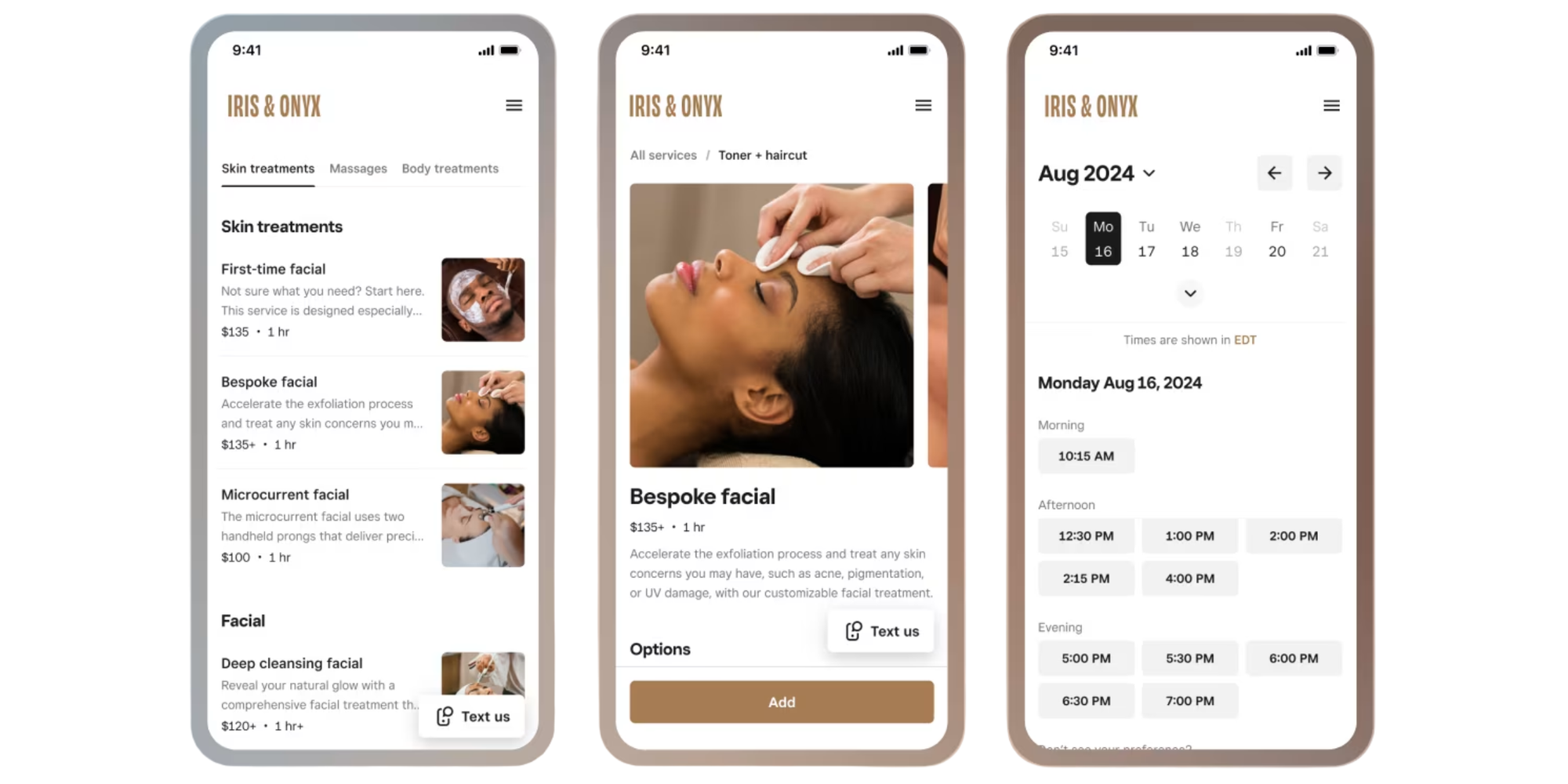
Best for: therapists already using Square for payments.
Pros:
- Excellent if Square is already your payment stack
- Simple booking flow
- Useful for solo or small teams
Cons:
- Less massage-specific, no SOAP notes
- Advanced forms/contracts and other business tools may depend on higher plans or related Square products.
Pricing:
Square Free has no monthly subscription fee, while Square Plus is $49 per location and Premium is $149 per location. The catch is that Square’s economics often shift toward processing fees and paid upgrades rather than a pure monthly software cost.
5. Mindbody
Mindbody is a more enterprise-style choice than most solo massage therapists need, but it can make sense for studios thinking bigger than simple appointment management.
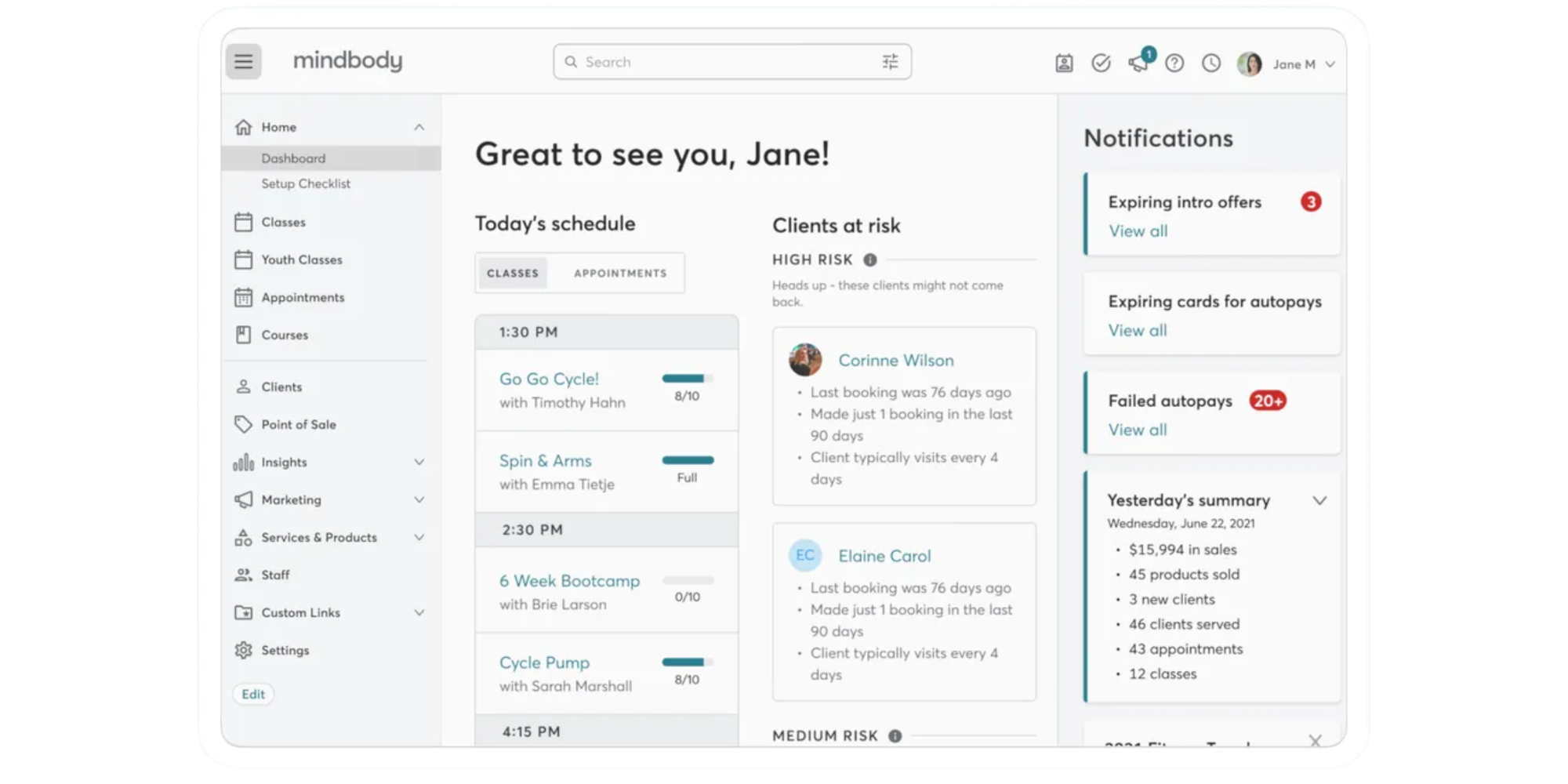
Best for: larger wellness brands, studios, and businesses that want growth, app discovery, and deeper operations.
Pros:
- Broad business platform
- Marketing and analytics depth
- Strong studio growth story
Cons:
- Higher starting price
- More complexity, often overkill for independent practitioners
Pricing:
Mindbody starts at $99 per month per location, with other pricing plans costs available on request. Even its Starter plan includes booking, payments, reporting, branded website widgets, and listing on the Mindbody app. Higher tiers add advanced scheduling, room/resource management, analytics, and built-in email/text marketing.
6. Koalendar
Koalendar is not massage-specific software, and that is part of the appeal. It focuses on the scheduling layer many therapists actually struggle with most: a branded booking page, self-booking, smart availability, calendar sync, reminders, waitlist, packages and payments.
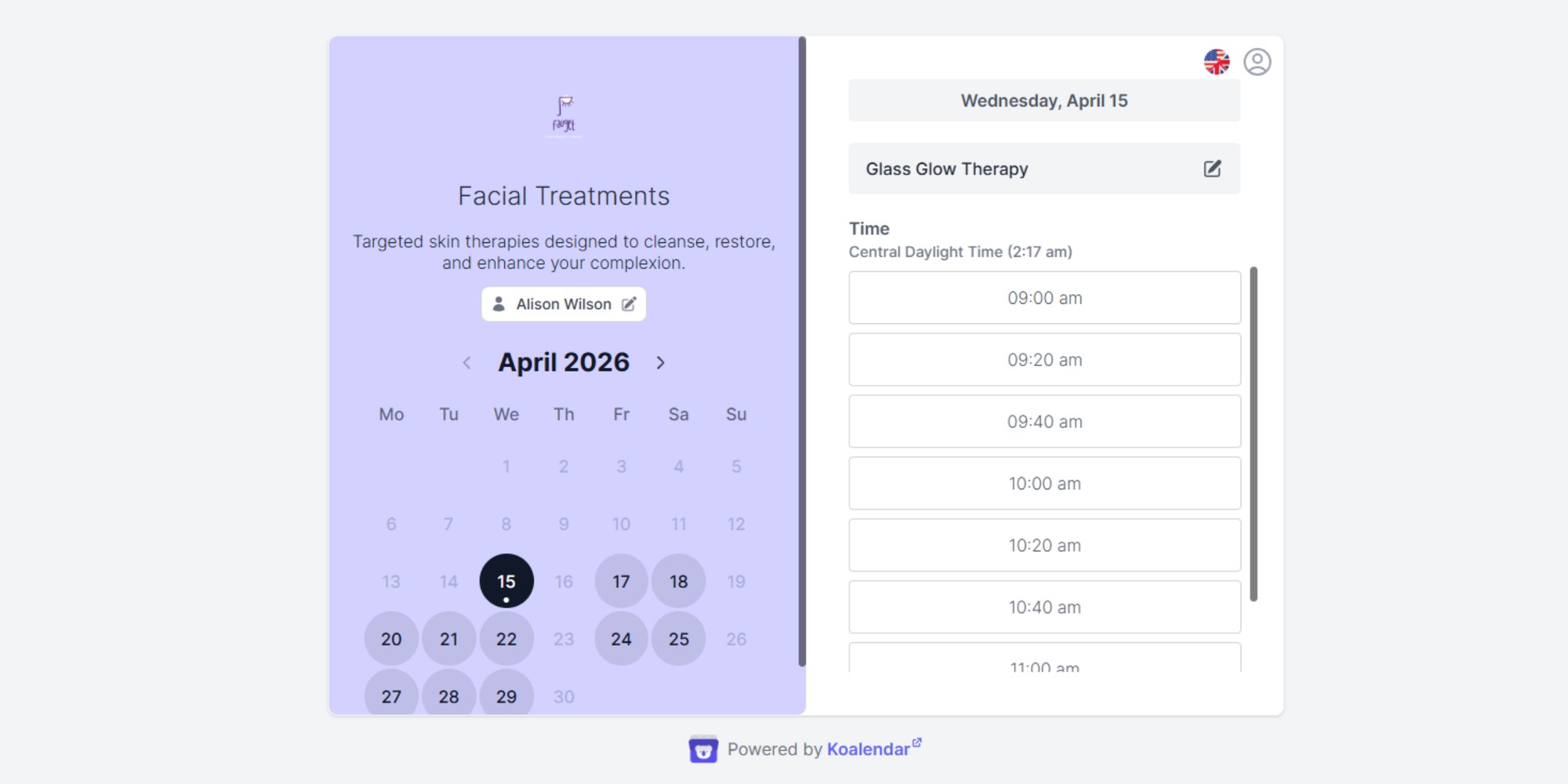
Best for: independent massage therapists who want simple, polished scheduling without the usual cost barrier.
Pros:
- Strong free forever plan
- Very affordable paid plan
- Clean setup, ready in 5 minutes
- Easy for solo therapists
- Customizable booking pages with logo, colors, branded link, and 40+ languages
- Payments (PayPal and Stripe) and intake forms
- HIPAA support with BAA available
Cons:
- Not built around SOAP notes or full clinic management, so therapists needing deep records may pair it with other tools or choose a massage-specific platform instead.
Pricing:
The Free Forever Plan includes unlimited bookings, unlimited event types, unlimited scheduling links, and 2 calendar syncs.
Pro starts at $6.99 per seat per month on annual billing and adds custom booking forms, payments, email and SMS reminders, follow-ups, tentative bookings, booking limits, and advanced integrations.
Best for solo therapists
For most solo therapists, the sweet spot is software that removes admin without forcing you into a heavy back-office system. That usually means online self-booking, calendar sync, reminders, and optional deposits.
- Koalendar stands out on value here because the free plan is genuinely usable, and the paid tier stays low-cost while adding the features solo service providers tend to need next.
- MassageBook is the stronger pick if SOAP notes and massage-specific records are central to your day-to-day workflow.
- Square Appointments works well if you already live inside Square.
Best for teams and studios
For multi-therapist setups, you need more than a booking page. You need staff calendars, clearer coordination, and better reporting.
- Vagaro and Mindbody both make sense for studios that want a more complete wellness operations platform.
- ClinicSense is a strong middle ground for small massage-focused clinics that want records plus scheduling.
- Koalendar can also work well for lean teams that mainly need shared scheduling, branded pages, approvals, and workload controls without moving into a bigger studio stack.
How to pick the right app for your practice
Start with your bottleneck, not the feature checklist.
If your biggest problem is missed calls and back-and-forth, choose a tool with great self-booking and a clean booking page.
If your biggest problem is no-shows, prioritize reminders and deposits.
If your biggest problem is paperwork, move toward intake forms and SOAP notes.
If your biggest problem is managing multiple therapists, focus on calendar coordination, limits, and reporting.
For many readers, that decision ends up being simpler than it first appears:
- Choose MassageBook if you want massage-specific practice management.
- Choose ClinicSense if you want a massage-focused system that still scales to a small clinic.
- Choose Vagaro or Mindbody if you run a broader wellness studio.
- Choose Square Appointments if payments are already centered on Square.
- Choose Koalendar if you want the best software for massage therapists who need the scheduling essentials done really well without paying for features they may never use.
Once you’ve chosen a tool, these exclusive scheduling tactics can help you get more value from your booking setup.
The bottom line? The best scheduling app for massage therapist businesses is the one that fits your real workflow, not the one with the longest feature list. If you are an independent therapist who wants a professional booking page, smart availability, calendar sync, reminders, and payment collection without a high monthly cost, Koalendar covers the core scheduling needs beautifully and gives you room to grow when you are ready.