
Results at a glance
🕒 Hours saved weekly: significantly less time spent in bookings as manual phone-based reservation coordination is largely eliminated
👥 Teams using Koalendar: Airline maintenance teams, with oversight from the Port of Portland’s Noise Management team
📅 Years using Koalendar: About 2 years
⭐ Top benefit: “It’s mainly streamlined our reservation system for that particular facility on the airport and kind of taken it out of the hands of the Port of Portland.”
Overview
The Port of Portland is a public agency serving the Portland, Oregon region through aviation, marine trade, and industrial development. It operates three airports, including Portland International Airport (PDX), alongside three active marine terminals and six business parks. Its work supports travel, trade, economic development, and nearly 62,000 jobs across the region.
At PDX, the Port manages infrastructure that keeps hundreds of daily passenger and cargo operations moving. One of those facilities is the Ground Run-Up Enclosure (GRE) — a specially designed space where airline mechanics can safely test aircraft engines after maintenance.
For Senior Web Applications Developer Chris Davais, helping the Port’s teams improve the way that facility was scheduled became an opportunity to replace an outdated process with something much simpler.
The challenge: A critical facility managed through phone calls
Before Koalendar, airline mechanics who needed to use the GRE had to call a reservation line.
The problem was that the calls went to a general communications center, where the person answering wasn’t always familiar with the facility or what needed to happen with the reservation.
“You can imagine it was something that was just getting handwritten on paper or stored in an Excel spreadsheet somewhere,” Chris explained.
Airline mechanics also had no easy way to see which times were already taken before calling.
“They couldn’t see what was available and they couldn’t see who had already booked some things.”
That lack of visibility mattered a lot as the GRE plays an important role in getting aircraft back into service. Airlines use it to test engines after maintenance before a plane returns to passenger or cargo operations.
And at an airport where many aircraft start their flying day early in the morning, delays can quickly spread.
“If the airplane is not available, then that can have a cascade effect throughout the entire country,” Chris said. “It could possibly affect thousands of passengers.”
The Port’s Management office wanted to move away from phone-based scheduling and give airline maintenance teams a clear, online way to manage reservations themselves.
The solution: A flexible scheduling system that fit into PDX’s website
Chris and his team started by gathering the Management office’s requirements.
The new system needed to:
- Work entirely online
- Fit directly into the existing PDX website
- Support different reservation durations
- Let Port staff block the GRE for maintenance
- Support enough users without making costs jump unexpectedly
- Stay simple for airline mechanics to use
Chris initially considered building the system himself.
“My first instinct is always like, okay, I’m going to build this myself. It’s going to be cool. It’s going to be great,” he said.
His supervisor had another idea: find a solution that already worked.
The team compared three or four different products before choosing Koalendar.
“We ended up selecting Koalendar because it had all of the features that we needed. The price was right. It was very easy to use. We knew it was going to be easy to use for our end users. It looked good.”
Some alternatives weren’t as feature-rich. Others had pricing that didn’t fit their needs or couldn’t be embedded the way the Port wanted.
Koalendar could.
The Port embedded the booking page directly into the GRE section of the official PDX website, alongside information airline mechanics already needed, such as facility contacts and current weather conditions.
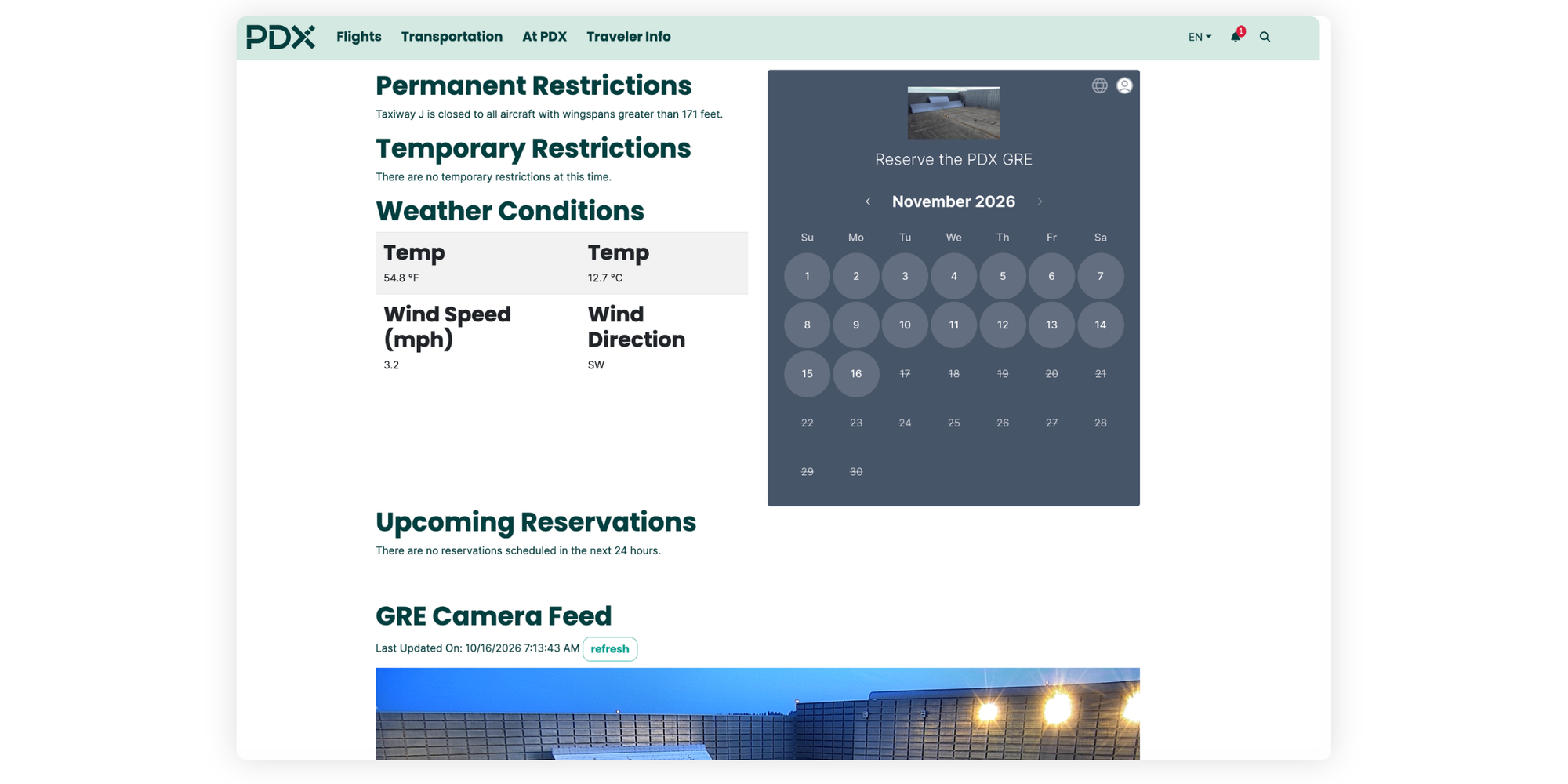
Mechanics can now choose from 30-minute, one-hour, 90-minute, or two-hour reservations. The booking form also collects details including the airline, aircraft tail number, and aircraft type.
For longer maintenance windows, mechanics can make multiple reservations. And when the GRE itself needs maintenance, Port teams can block entire days.
Making reservations more visible with Koalendar webhooks
For roughly the first year, the setup worked without any issues.
Then one situation revealed another opportunity.
An airline had reserved the GRE for several hours but either finished early or didn’t use the reservation. The slot stayed blocked, and another airline needed to test an aircraft that morning.
They could see that the GRE was reserved — but not who had reserved it.
“They didn’t know which airline to contact or which maintenance person to contact,” Chris said.
Rather than replacing the scheduling system, Chris remembered a Koalendar feature he had noticed during the original setup: webhooks.
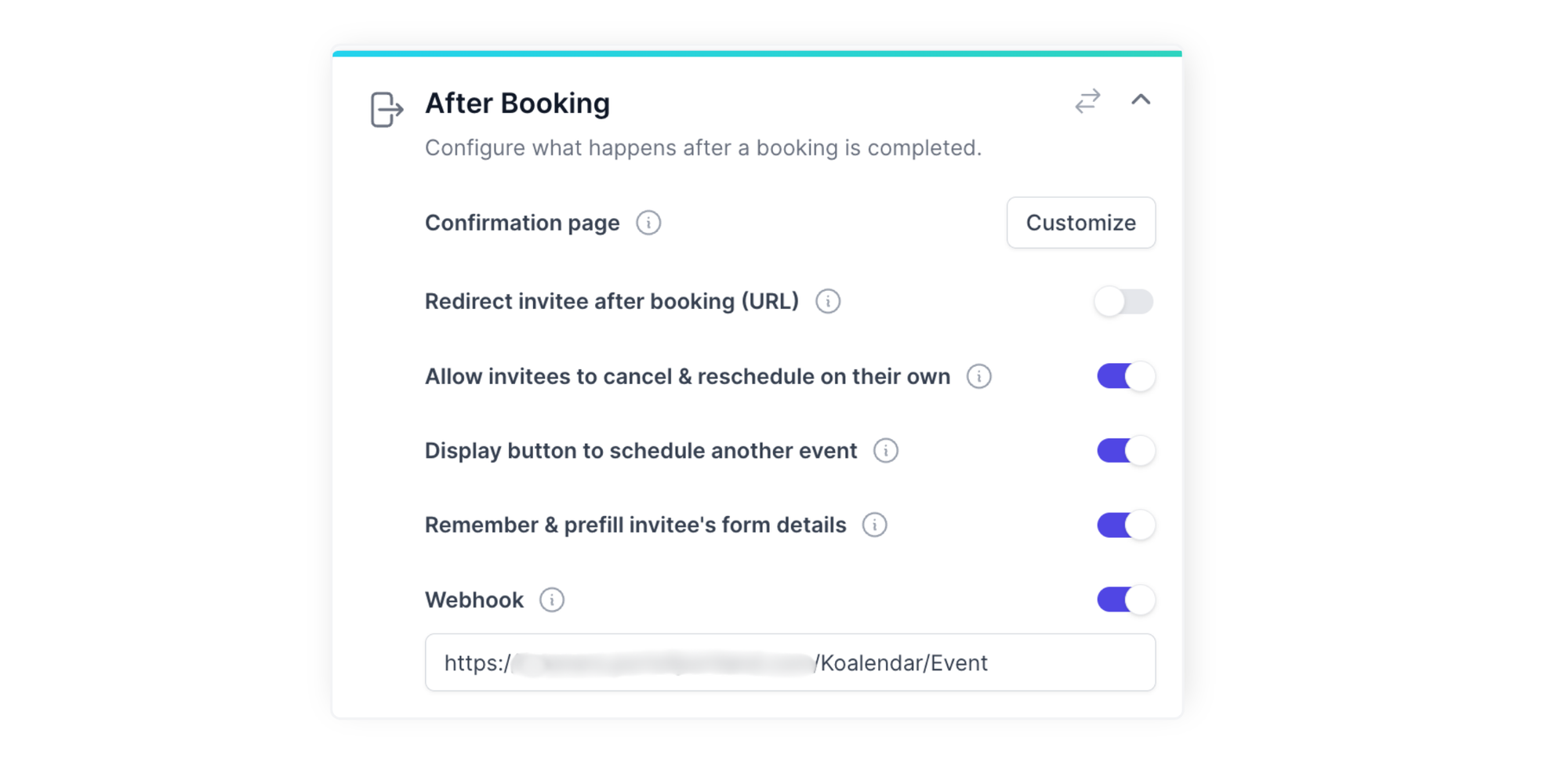
The Port already had infrastructure capable of receiving webhook data, so Chris connected Koalendar to its own system and created a database to store reservation information.
Now, alongside the booking interface, the PDX website can display upcoming GRE reservations with the operational information teams need.
Airlines can see details including which airline has the space reserved, which mechanic to contact, what aircraft is expected, and how long the reservation lasts.
“If it ever comes up again, it’s very easy for them to figure out who to contact and see if they can use that slot that may or may not be open.”
It gave the Port the extra visibility it needed while keeping the booking experience simple.
The outcome: Airlines manage the schedule themselves
Today, the biggest change is simple: the Port no longer has to manage every GRE reservation.
Airline maintenance teams can see availability, choose a time, submit the information the Port needs, and manage the scheduling process themselves.
“It mainly streamlined our reservation system for that particular facility on the airport,” Chris said, “and kind of took it out of the hands of the Port of Portland and allowed the airlines to manage the space themselves in terms of the schedule.”
The GRE is typically used every weeknight, with Chris often seeing two or three reservations that took place overnight between midnight and 6 a.m.
And demand is growing.
As more aircraft operations and maintenance activity come through Portland, Chris expects the facility — and the reservation system behind it — to get even more use.
Without an online system, he believes the old process would have become increasingly difficult to manage.
“I would imagine it would have just gotten even more chaotic over time for the airlines and for the mechanics.”
Instead, scheduling mostly runs without Port staff having to step in.
For Chris, reliability has been just as important as flexibility:
“As far as I know, it’s never gone down, it’s never had any kind of errors or problems. So yeah, we’re very happy.”
What the Port of Portland values about Koalendar
✅ Self-service online booking instead of phone reservations
✅ Flexible reservation settings for different testing needs
✅ Availability blocking for facility maintenance
✅ Integration with the existing FlyPDX website
✅ Webhooks for connecting booking data to the Port’s own systems
✅ Simple experience for administrators and airline mechanics
✅ Reliable day-to-day operation
“From what I’ve seen, it works incredibly well for what we need, especially at the price that we’re paying. So I’m happy with it.”
From phone calls to self-service scheduling
For the Port of Portland, Koalendar replaced a fragmented phone-based process with one place where airline mechanics can see availability and reserve the GRE themselves.
And when the Port needed more operational visibility, Koalendar’s webhook functionality gave Chris the flexibility to build it into their existing systems.
The result is a reservation process that asks far less of Port staff while giving the airlines more control.
No calls to coordinate a time. No guessing what’s available. And no need for the Port to manage every reservation manually.
One scheduling page, built into the way PDX already works.